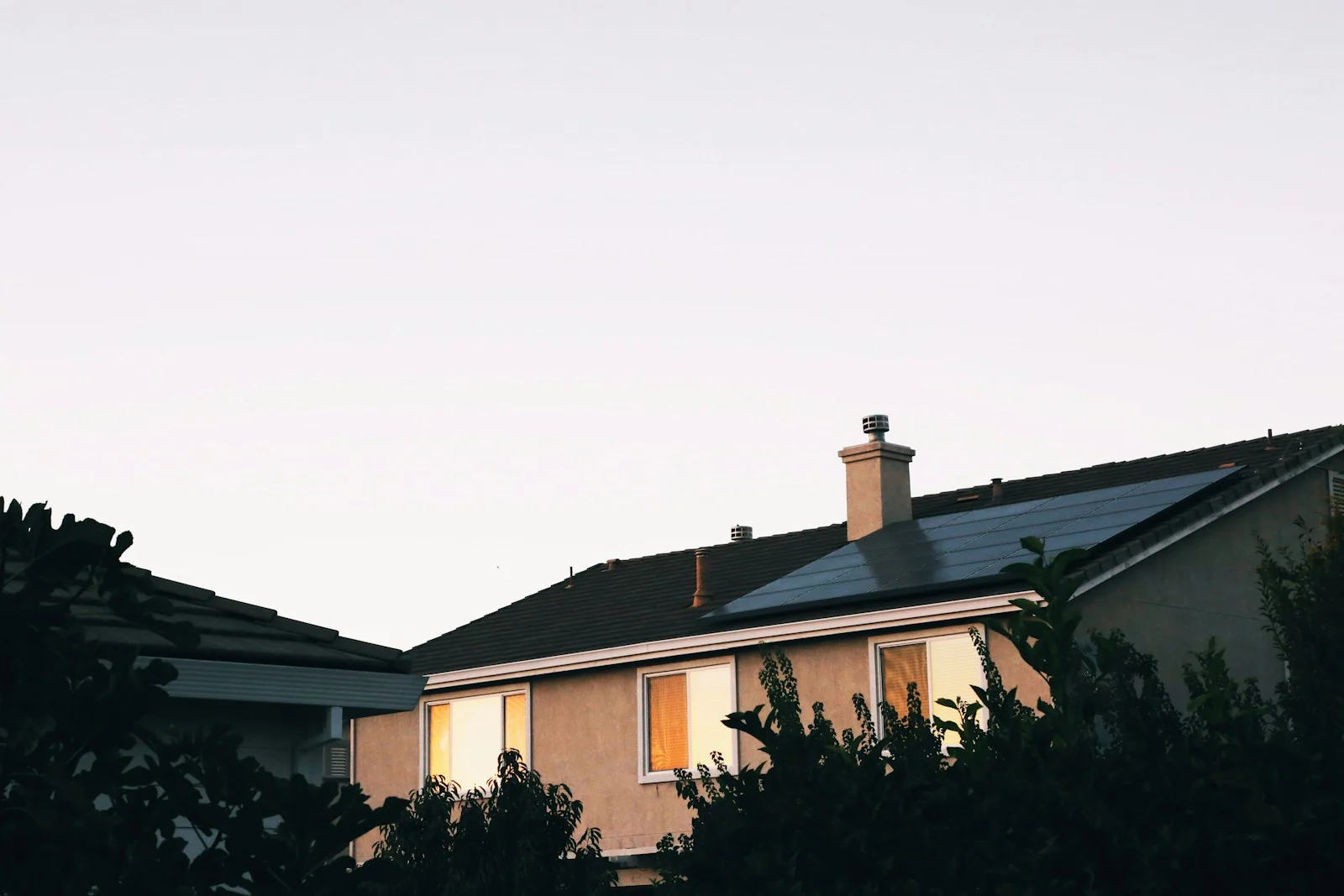
01 / SOLAR PANELS
A little sunlight.
A bigger picture.
Solar panels are one part of a considered energy system. The real starting point is your building, your routine and what you want to achieve.
Talk about your roof↗PHOTOVOLTAICS / A CLOSER LOOKLight → Electricity Think beyond the panel.
Start with the whole place.
What solar actually does
Photovoltaic panels convert daylight into electricity. An inverter changes that electricity into a form the property can use. Generation varies with the available light, orientation, shading and the system itself. It is a different technology from solar thermal, which heats water.
Electricity generated while you are using appliances can be used on site. Depending on the agreed design, surplus may go to compatible storage or the grid. Solar does not automatically provide power in an outage; backup operation needs specifically designed equipment and arrangements.
THE ROOF IS PART OF THE SYSTEM
Space. Shade.
Structure. Sunlight.
A useful assessment considers the roof covering, condition, usable area and nearby shade alongside the electrical installation. Roof access and any planned building work belong in the conversation too.
FOUR THINGS THAT MATTER
Better questions.
A better starting point.
No two roofs or routines are identical. These are useful questions to bring to an individual project discussion.
01 / YOUR ROOFWhat are we working with?
Describe the roof type, approximate age and condition. Note dormers, roof windows, chimneys and any areas that may be shaded. Photos taken safely from ground level can help explain the setting; there’s no need to climb onto the roof.
02 / YOUR ROUTINEWhen does your place use power?
Daytime activity, home working, business hours and larger electrical loads change the energy picture. A recent bill or annual electricity-use figure can be a useful starting point. Leave account numbers and payment details out of the initial enquiry.
03 / YOUR PLANSWhat might change?
Mention future building work, a change of use or plans to add larger electrical loads. Decisions about panel layout, inverter choice and optional storage should account for those plans rather than focusing only on the panel count.
04 / YOUR DECISIONWhat should a proposal explain?
Ask for the proposed equipment, design assumptions, expected generation, included work and exclusions. Clarify access arrangements, responsibilities, permissions, warranties and handover information before accepting an offer. Project-specific terms need written confirmation.
YOUR NEXT CHAPTER
A little context.
A brighter conversation.
Tell us where your property is, how you use electricity and what you’d like to explore. We’ll start with the right questions and confirm what’s possible for your project.
Let’s talk solar↗Your roof. Your routine.
Your starting point.